
The Best Time of Year to Trim Trees in Virginia
· By Marcos Gomes
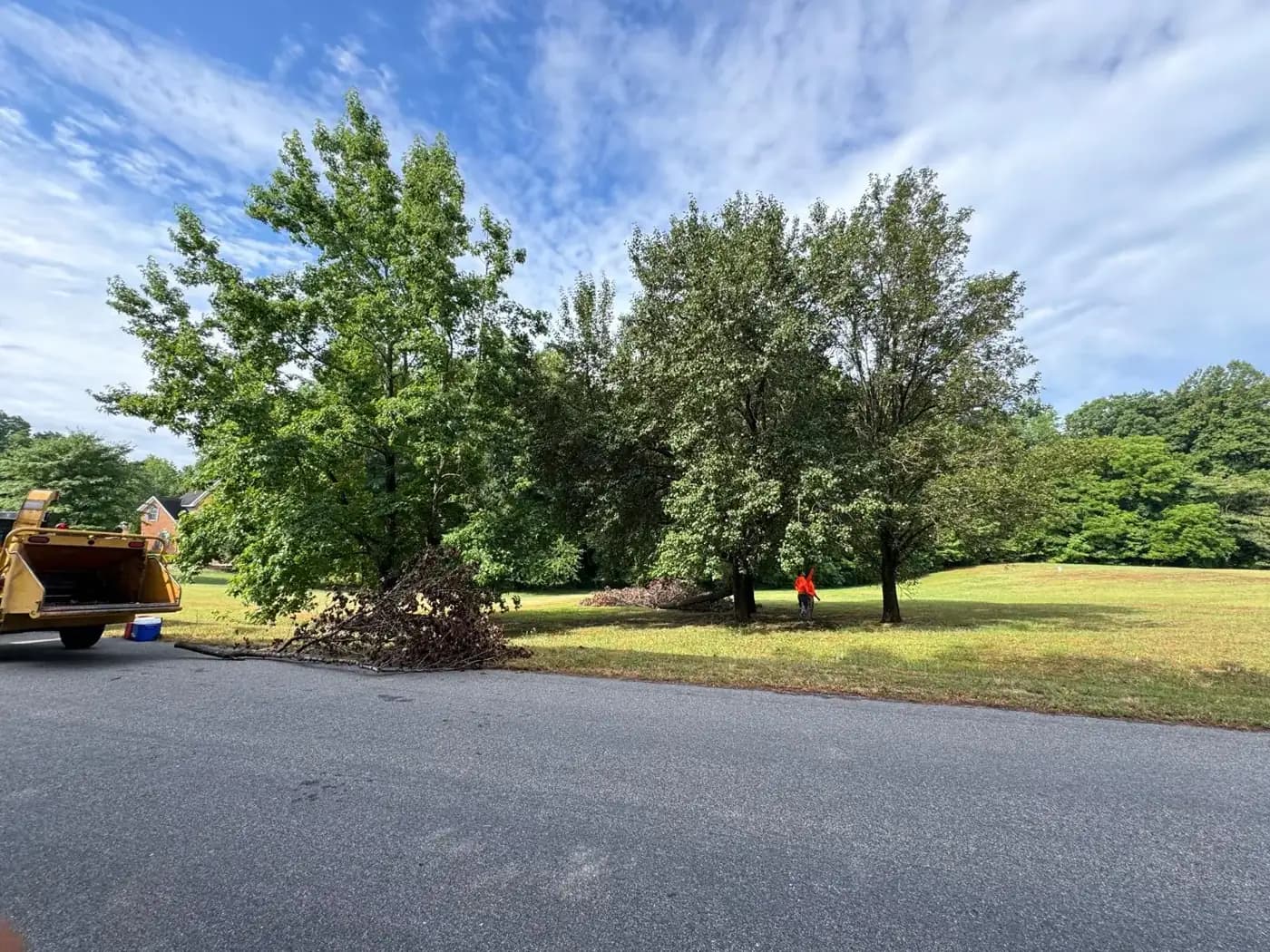
Ask ten people when to prune a tree and you will get ten answers. For most trees in Central Virginia, though, the answer is simpler than it seems: late fall through late winter, while the tree is dormant. There are exceptions for flowering trees and for anything dead or dangerous, which should not wait for the calendar.
This guide walks through the timing that works for the trees most common around Richmond, from oaks and maples to pines and crape myrtles, and explains why timing matters at all.
Why dormant season works best
From roughly November through early March, most deciduous trees in Virginia are dormant. Without leaves, it is easy to see the structure of the tree: which limbs cross, which are dead, which are growing toward the roof. Cuts made during dormancy start sealing quickly once growth resumes in spring.
Many insects and disease spores are also less active in cold weather, which reduces the chance that fresh cuts become an entry point. And with leaves off, there is less weight and less debris, which makes the work cleaner and often quicker.
Oaks: avoid pruning in late spring and early summer
Oaks are everywhere in the Richmond area, and they deserve a specific note. Oak wilt, a serious fungal disease, can spread through fresh pruning wounds during the warm months when the beetles that carry it are active. Oak wilt has been found in parts of Virginia, so the common recommendation is to avoid pruning oaks from spring into midsummer unless it is necessary for safety.
Winter pruning is the safest choice for oaks. If an oak limb breaks in a summer storm, of course it should be cleaned up right away.
Maples, birches and other bleeders
Maples, birches and a few other trees "bleed" sap heavily when pruned in late winter as the sap starts moving. It looks alarming, but it does not usually harm the tree. If the dripping bothers you, these trees can be pruned in early summer after the leaves have fully formed, or in late fall.
Flowering trees: prune right after they bloom
Dogwoods, redbuds, cherries and other spring bloomers set next year’s flower buds during the summer. Pruning them in winter cuts off those buds and you lose the flowers. The usual rule is to prune spring-flowering trees shortly after they finish blooming.
Crape myrtles are the exception that flower on new growth, so late winter is a good time for them. The key with crape myrtles is how you prune, not just when, which we cover in a separate guide.
Pines and evergreens
Loblolly and Virginia pines rarely need shaping. The usual work is removing dead lower limbs, broken branches and limbs over the roof. That can be done most of the year, though late fall and winter are comfortable and keep fresh wounds away from peak insect activity.
What should not wait for the right season
Dead limbs, broken limbs hanging in the canopy, branches resting on the roof and anything that could fall on people or cars should be dealt with as soon as possible, no matter the month. Storm damage is the same. Safety beats timing every time.
If you are not sure whether a limb is dangerous, a quick look from someone experienced is worth it before hurricane season, which in Virginia runs through the late summer and fall.
Do not over-prune, whatever the season
A common rule of thumb is to avoid removing more than about a quarter of a tree’s living canopy in one year. Removing too much stresses the tree and triggers a flush of weak sprouts. Topping, which means cutting the main stems back to stubs, is the worst version of this and it shortens a tree’s life.
Good pruning removes the right limbs, at the right spot on the branch, and leaves a tree that still looks natural.
A simple pruning calendar for Richmond-area yards
If you like to plan, here is a calendar that works for most yards around Richmond, Henrico, Hanover and Chesterfield. In December and January, prune oaks, maples you do not mind bleeding a little, river birches and most shade trees, and plan any removals while the leaves are off. In February and March, thin crape myrtles, finish structural pruning before buds open and grind any stumps you want gone before spring planting.
In April and May, prune dogwoods, redbuds and flowering cherries right after they finish blooming, and keep heavy pruning off oaks. In June through August, limit work to dead, broken and dangerous limbs, plus light clearance pruning off roofs and driveways. September and October are a good time to look at your big trees with fresh eyes before winter storms, and in November the dormant pruning season starts again.
DIY or call a crew?
Small branches you can reach from the ground with a pole pruner are fine to handle yourself, as long as you cut back to a side branch or the trunk collar and do not leave stubs. Anything that needs a ladder and a chainsaw at the same time, anything over the roof, and anything near the wires that run to the house is where most homeowner injuries happen.
A crew can usually do in a morning what takes a homeowner several weekends, and the brush leaves in the chipper instead of piling up at the curb. If you are in the Richmond area and want a second opinion on timing, text a photo of the tree and the limbs that bother you.
Free estimates for tree trimming
Central Virginia winters are usually mild enough for dormant pruning from December through February, which is why that window is so popular. Booking early gives you the most choice of dates.
MG Tree Service trims and prunes trees across the Richmond area and Fredericksburg, seven days a week from 8 AM to 6 PM. Estimates are free, and we can tell you whether a tree should be pruned now or whether it is better to wait for the right season.
If you have several trees, we can group them into one visit and time each one to its best season.
Frequently asked questions
- Can I trim trees in the summer in Virginia?
- Light pruning and removal of dead or dangerous limbs is fine in summer. Avoid heavy pruning on oaks during the warm months because of oak wilt risk.
- When should I prune my dogwood?
- Right after it finishes flowering in spring, so you do not cut off next year’s flower buds.
- Is fall a good time to trim trees?
- Late fall, once leaves drop, is a good start to the dormant pruning season for most trees.
- How often should mature trees be trimmed?
- Most mature yard trees benefit from a check every few years. Fast growers close to the house may need it more often.
Related services
Found this helpful? Make us a preferred source on Google.
Ready for an exact price?
Get a free, no-pressure in-home estimate. Real numbers for your home, not a phone guess.