Big Old Shade Trees in Chester, VA: Keep, Prune or Remove?
· By Marcos Gomes
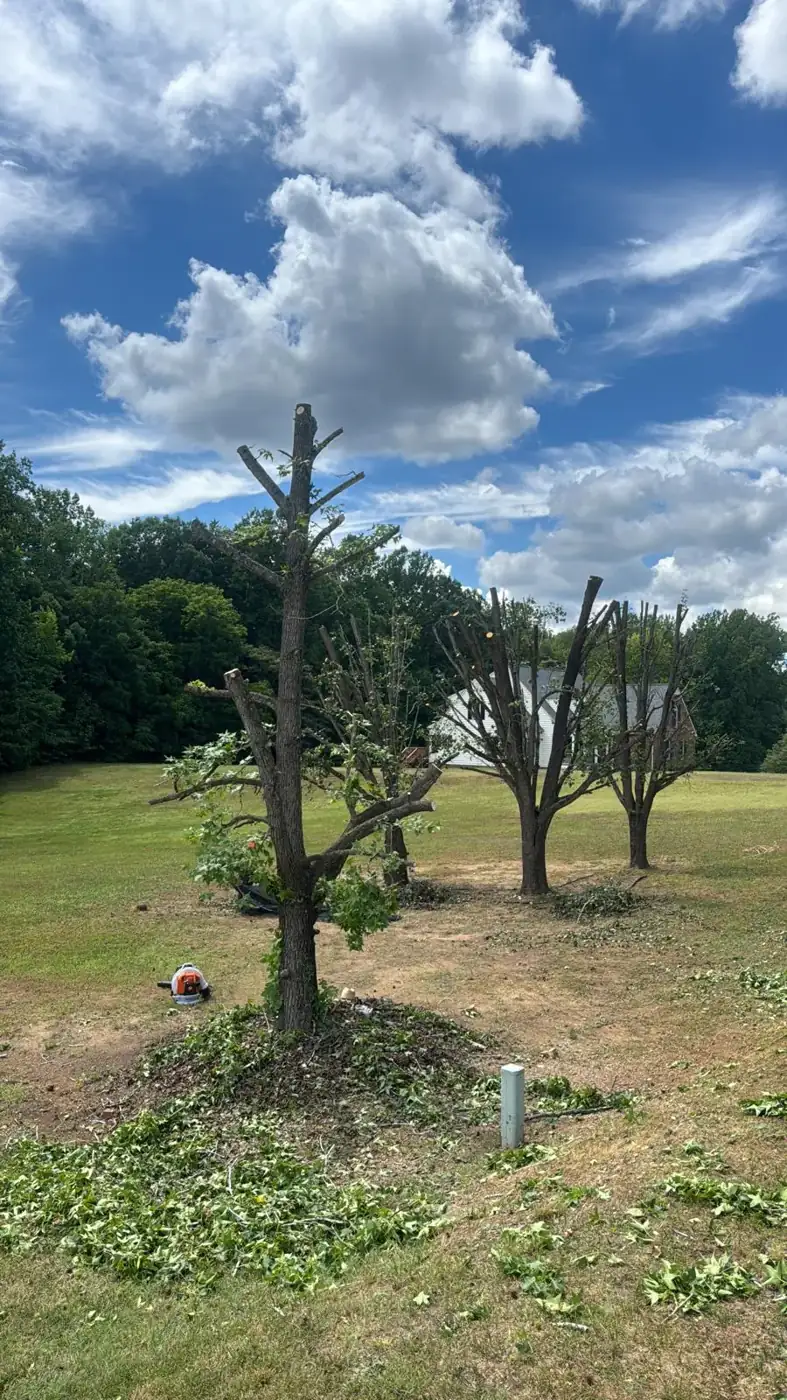
In the older parts of Chester, around the historic center and the streets off Route 10 and Route 1, many homes sit under big old oaks and maples that are older than the houses themselves. They provide shade that no new tree can match for decades, and they add real character to a property.
They also raise a recurring question: is this tree still safe near my house? This guide helps you think through the options before deciding.
Option 1: Keep it and monitor
A healthy old tree with a full canopy, no major dead limbs, no decay at the base and enough distance from the house may need nothing more than a yearly look. Watch for changes: new dead branches, thinning leaves, mushrooms at the base, new cracks or lean.
Protecting the root zone matters just as much. Avoid parking, piling soil or digging under the canopy. Most of a tree’s roots are in the top foot or two of soil and spread well past the branches.
Option 2: Prune to reduce risk
Many old trees can be made safer with targeted pruning. Removing dead wood takes out the limbs most likely to fall. Reducing the length of heavy limbs that extend over the roof lowers the load on them. Raising low limbs clears the roof, driveway and walks.
Good pruning removes as little live wood as necessary and makes cuts at the right point on each branch. Topping, cutting big limbs back to stubs, should be avoided. It creates decay and weak regrowth that is more dangerous over time.
Option 3: Remove it
Removal becomes the safer choice when a tree has serious decay in the trunk or root flare, a large crack through the main trunk, a significant lean with root failure, or when most of the canopy is dead. Trees with major structural defects positioned over bedrooms or living areas deserve extra caution.
Removing a big tree next to an older house is a sectional job: a climber takes it down piece by piece and heavy wood is lowered on rope. It takes time, but it protects the house.
Chester-specific considerations
Chester sits between the James and Appomattox rivers, and storms moving up the river corridor bring strong wind. Older trees with dead limbs or decay are the ones most likely to fail in those events, so late winter and spring are the right time to deal with them.
Properties close to the rivers or creeks can be inside Chesapeake Bay Resource Protection Areas, where vegetation removal is restricted. Neighborhoods like Rivers Bend also have HOA guidelines. Check before removing trees in those situations.
If you remove it, plan the replacement
Losing an old shade tree changes a yard. Grinding the stump and planting a new tree in a better spot, farther from the house, starts the next generation of shade. Oaks, maples and other native trees do well in Chester, given room to grow.
Get an honest opinion
We work on old trees in Chester regularly. We will tell you plainly whether pruning makes sense or whether removal is the safer call, and give you a written price either way.
Questions to ask before you decide
Before choosing between keeping, pruning or removing an old tree, run through a few simple questions. What could the tree hit if it failed: the bedroom, the driveway, the neighbor’s house or just the lawn? Has the tree changed in the last few years, with more dead branches, thinner leaves or new cracks? Was there any digging or construction near it recently? Is the trunk solid at the base, or are there cavities, mushrooms or soft wood?
Write down the answers and take photos from a few angles. They make any conversation with a tree company faster and more useful, and they give you a record you can compare next year.
What a typical pruning visit looks like
On an old oak or maple in Chester, a pruning visit usually starts from the top. A climber removes dead wood first, then shortens heavy limbs that extend far over the roof, then raises any low limbs over the driveway or walk. Branches are lowered with rope when they are over the house, and everything is chipped on site.
Most mature trees need this kind of attention every few years rather than every year. Between visits, the best thing you can do is protect the root zone: no parking under the canopy, no piling soil or mulch against the trunk and deep watering during long dry spells in late summer.
If pruning is not enough and the tree has to come out, ask about replanting. A new native shade tree planted farther from the house is the best way to keep the character of the street for the next generation.
Why old trees fail in summer storms
Many large trees that come down in Chester fail during summer thunderstorms rather than winter. A full canopy of leaves acts like a sail, and a sudden gust can put more force on a weak limb or a decayed trunk than it has ever carried. Heavy rain before the wind softens the soil, so roots hold less. That combination is why dead limbs and structural defects matter most from June through September.
Reducing the length of heavy limbs, removing dead wood and thinning a little of the canopy all lower the load a tree carries in wind. That is often the difference between a tree that rides out a storm and one that drops a limb on the porch.
Free estimates in Chester
Old willow oaks, red oaks and tulip poplars are common in Chester yards, and many have been there longer than the houses. A careful look every few years is the best way to keep them safe and keep the shade.
MG Tree Service works in Chester seven days a week from 8 AM to 6 PM. Estimates are free, and we will give you an honest opinion on whether your old shade tree should be kept, pruned or removed.
If removal is the right call, we can also grind the stump and refresh the area with mulch so the yard looks finished.
Frequently asked questions
- How long do oaks live?
- Many oaks can live well over a hundred years in good conditions. Yard trees often live shorter lives because of root damage and limited space.
- Is a hollow tree always dangerous?
- Not always. Some hollow trees remain stable for years. The size of the hollow compared to the sound wood around it matters. Have it evaluated.
- Can pruning save a declining tree?
- Pruning removes risk and can help a stressed tree, but it cannot reverse advanced decay or major root damage.
Related services
Serving
Found this helpful? Make us a preferred source on Google.
Ready for an exact price?
Get a free, no-pressure in-home estimate. Real numbers for your home, not a phone guess.