
Clearing a Backyard in Chesterfield County: A Step-by-Step Plan
· By Marcos Gomes
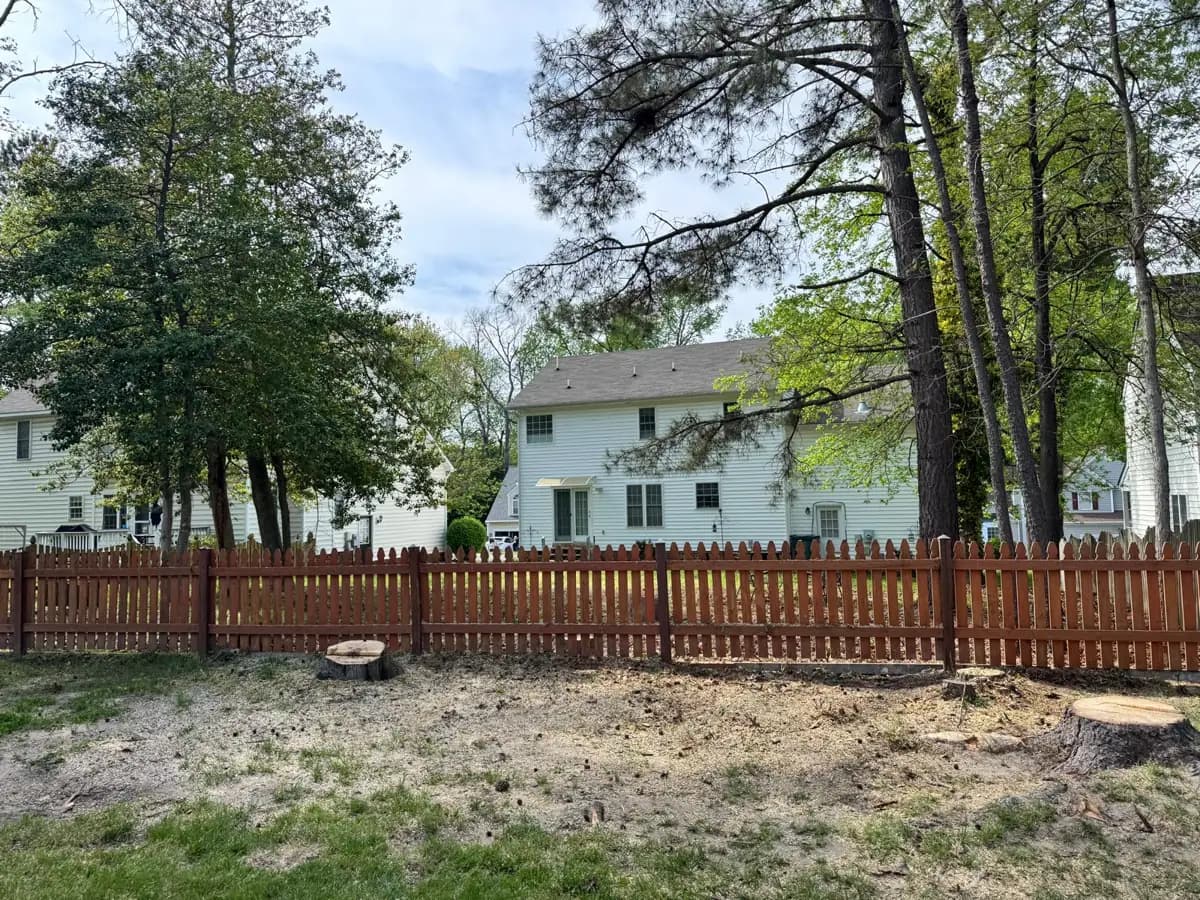
Chesterfield County lots tend to be generous, and many of them are partly wooded. Over the years, the woods move in: volunteer pines and sweetgums along the fence, vines climbing everything and brush that turns the back of the yard into a place nobody goes.
Clearing it is very doable. This plan walks through the decisions in the order that saves time and money.
1. Decide what you want the space to become
A lawn, a garden, a play area, a shed, a fence line or just a cleaner woodland edge each need a different level of clearing. A lawn needs stumps ground and the ground leveled. A woodland edge only needs brush and a few trees out. Knowing the goal decides everything else.
2. Mark what stays
Walk the area and flag the trees you want to keep: healthy hardwoods with good shape, trees that give shade where you want it and anything that screens a view you do not want to see. Keeping a few good trees makes the cleared space look established instead of bare.
3. Check for water and protected areas
Chesterfield designates Resource Protection Areas along streams and wetlands under the Chesapeake Bay Preservation Act. Clearing inside those buffers is restricted. If the area you want cleared is near a creek, pond or low wet ground, check with the county before work starts. If you live in an HOA neighborhood like Brandermill, check the covenants too.
4. Decide on stumps and wood
Stumps can be cut low to the ground or ground below grade. For a lawn, grinding is the way to go. For wood, decide if you want firewood left stacked, which saves hauling, or everything chipped and removed. Put these decisions in the estimate so every quote covers the same scope.
5. Pick the right season
Late fall through winter is ideal for clearing in Central Virginia. Leaves are down, so it is easier to see and work; the ground is often firmer; vines and brush are dormant; and it avoids the spring nesting season for most birds. Very wet periods can push heavy work back to protect the soil.
6. After the clearing: getting it ready for grass
Once trees, brush and stumps are out, rake out remaining chips and debris, add topsoil to low spots and stump holes, and grade so water drains away from the house. Cool-season grasses like tall fescue are usually seeded in early fall in the Richmond area, so a winter clearing lines up nicely with fall seeding, or spring seeding if you are patient with watering.
A real example
Our lot clearing page shows a real before and after of exactly this kind of job: a dense strip of pines and hardwoods behind a wood fence, cleared to open ground with the fence untouched and the stumps cut low. If your Chesterfield backyard looks like the "before," send us a photo.
What a clearing day looks like
On a typical Chesterfield clearing job, the crew starts by cutting the underbrush and vines so they can move safely and see the trees. Brush goes straight into the chipper. Then the trees marked for removal come down, smallest first, with larger trees near fences or houses taken down in sections and lowered with rope. Logs are cut to length and either stacked for you or loaded for hauling.
Stump grinding usually comes at the end, once everything else is out of the way, so the grinder can work across the whole area. The last step is cleanup: raking chips, blowing off the driveway and leaving the ground ready for the next step.
Budget tips for a backyard clearing project
Clearing costs less when the scope is clear. Mark the trees you want to keep before the estimate, decide whether you want firewood left on site and decide whether stumps should be ground or just cut low. Each of those choices changes the price, so making them early avoids surprises.
Doing the work in winter, when crews are often less busy and the ground is firmer, can also help. And if part of the area is just brush and saplings, you may be able to phase the project: clear the brush this year and the larger trees next year.
Whatever you choose, ask for a written quote that lists what is included. It is the easiest way to compare companies fairly and to know exactly what the yard will look like when the crew leaves.
Wildlife, nesting and timing
Many Chesterfield backyards that back up to woods are home to birds, squirrels and other wildlife. Clearing in late fall and winter avoids the main spring and early summer nesting season for most birds, and it is also when brush and vines are dormant and easier to cut. If you spot an active nest in a tree you want removed during the warmer months, mention it at the estimate.
Leaving a few healthy trees and a strip of native shrubs along the back line keeps some habitat while still giving you the open space you want. A cleared yard with a natural edge often looks better than a fully bare lot, and it keeps some privacy from the neighbors behind you.
Typical Chesterfield backyards
Many Chesterfield homes back up to woods: loblolly pine, sweetgum, red maple, tulip poplar and oak, with holly, greenbrier and privet filling the ground layer. Lots near Swift Creek, the Appomattox and the many small streams can be wet in winter, which affects when heavy equipment can work without leaving ruts.
A clearing plan for these yards usually means opening up the brushy part and some of the smaller trees, while keeping a screen of healthy trees along the back line.
Free estimates in Chesterfield
Bring your ideas for the space, even rough ones like a play area, a garden or more lawn, and we will suggest how much to clear to get there.
MG Tree Service clears backyards, removes trees, grinds stumps and installs mulch across Chesterfield. Estimates are free and we work seven days a week from 8 AM to 6 PM, so we can walk the yard with you at a time that works.
Frequently asked questions
- How long does a backyard clearing take?
- Small areas of brush can be a day. Larger areas with many mature trees can take several days.
- Do I need a permit to clear my backyard in Chesterfield?
- Usually not for a normal residential yard. Areas near water in Resource Protection Areas and large land disturbance can be different.
- When should I seed after clearing?
- Early fall is the classic time for tall fescue in Central Virginia. Spring seeding is possible with more watering.
Related services
Serving
Found this helpful? Make us a preferred source on Google.
Ready for an exact price?
Get a free, no-pressure in-home estimate. Real numbers for your home, not a phone guess.