Tree Care Near the Rivers: A Guide for Hopewell Homeowners
· By Marcos Gomes
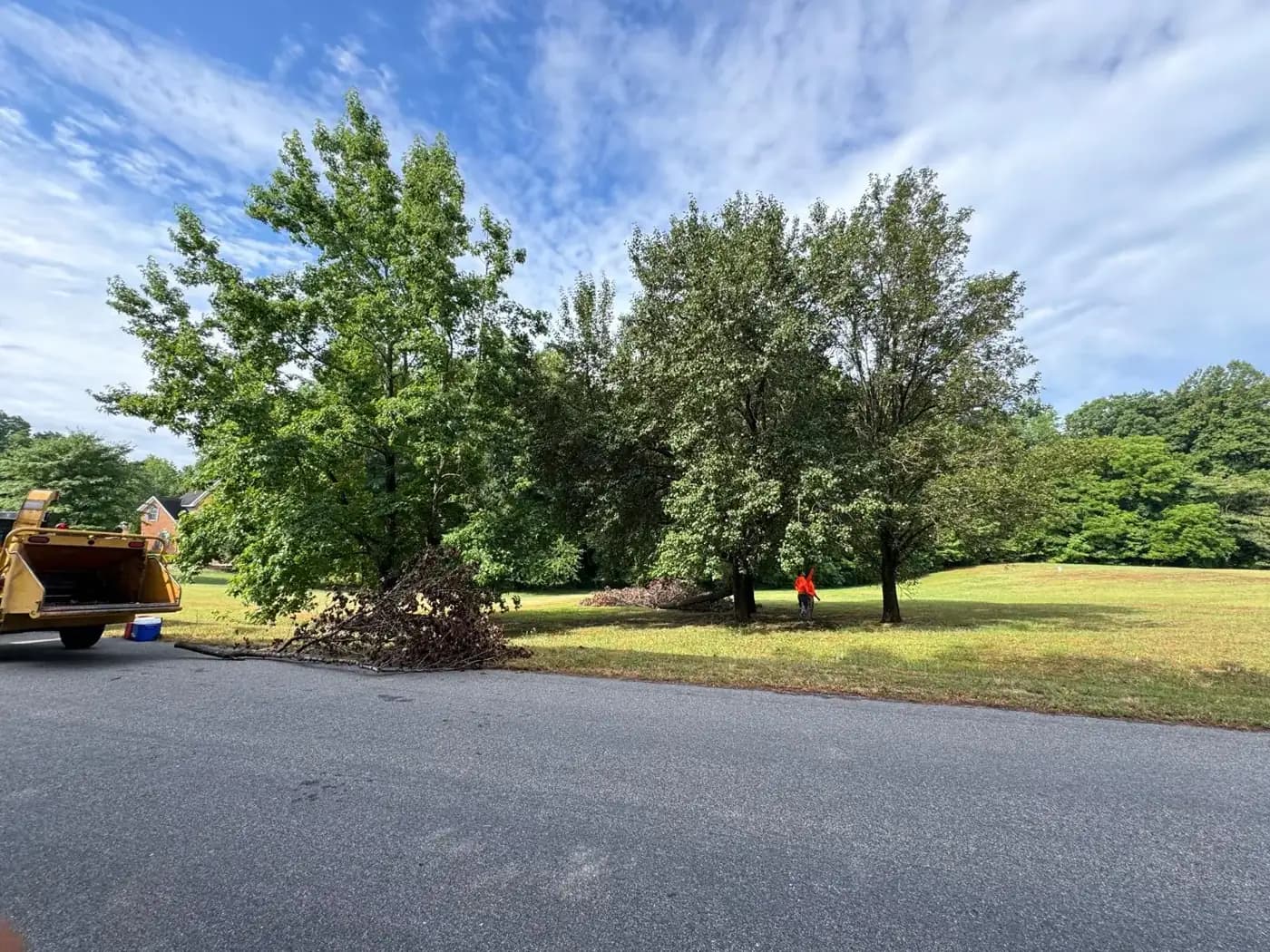
Hopewell’s position on a bluff above the Appomattox and the James gives it great views and a long history. It also exposes its trees to wind coming up the rivers and to soils that range from dry bluff tops to wet bottomland.
This guide covers what Hopewell homeowners should know about caring for the big, often old trees on their lots.
River wind and old trees
Storms that travel up the James can bring strong gusts to Hopewell. Healthy trees handle it. Trees with dead limbs, decayed trunks or weak unions are the ones that fail. Many Hopewell neighborhoods grew up in the early and middle 1900s, so plenty of yard trees are old and carry decades of storm damage.
A yearly look at big trees near the house, ideally in late winter, catches most problems before the summer and hurricane seasons.
Wet soil and shallow roots
In low spots near the rivers and creeks, soil stays wet and roots grow shallow. Trees in wet soil are more prone to uprooting during storms that bring heavy rain followed by wind. Watch for soil heaving at the base or a new lean after storms.
Common Hopewell trees
Sycamores love river areas and grow huge, with heavy limbs. Old oaks and maples shade many streets and yards. Pecans show up in older lots and have brittle limbs that break in storms. And fast-growing volunteers like tree of heaven take over fence lines and vacant lots.
Invasive trees worth removing
Tree of heaven is an invasive species that spreads aggressively by seed and root suckers, crowds out other plants and has weak wood. It also hosts the spotted lanternfly, an invasive insect that has spread into Virginia. Removing tree of heaven, and treating the stump so it does not sucker, is worth it in most yards.
Callery pears are another invasive that spreads into open areas and splits as it ages.
City trees vs your trees
Trees in the strip between the sidewalk and street are generally the City of Hopewell’s responsibility. Report problems with those trees to the city. Trees on your lot are yours to maintain.
Near the rivers, Chesapeake Bay protection rules can limit clearing in buffers along the water. Check with the city before removing trees close to the shoreline.
Overgrown lots
Hopewell has a number of lots that have been left to grow over. Clearing them means cutting brush and volunteer trees, removing larger trees that are in poor condition and grinding stumps so the ground can be mowed. It is a common project before selling, renting or building.
Working with us in Hopewell
We do removals, trimming, stump grinding and lot clearing in Hopewell and nearby Prince George. Text a photo of the tree or lot and we will set up a time to look at it.
A yearly checklist for Hopewell yards
Once a year, ideally in late winter, walk around your property with this list. Look for dead limbs over the roof, driveway and sidewalk. Check the base of big trees for mushrooms, cavities and cracked soil. Note any tree that leans more than last year. Look along fence lines for volunteer trees and tree of heaven before they get big. And check the strip by the street, so you can report city tree problems early.
Writing down what you find each year makes changes obvious. A tree that drops a few more dead branches every year is telling you something.
When to call for help
Call a tree company when a dead limb is too high to reach safely from the ground, when a tree leans toward the house, or when you see decay at the base of a large tree. Call the city for trees in the public strip and the power company for anything touching the main lines.
We work in Hopewell regularly. A photo of the tree and a note about what worries you is the easiest way to start, and we will tell you plainly whether it needs pruning, removal or just watching.
Choosing trees that handle river conditions
If you are replanting in Hopewell, pick species that tolerate both wet springs and dry summers. River birch, sycamore, swamp white oak, willow oak and bald cypress all handle wet soil well, while red maple adapts to a wide range of conditions. Keep large species well away from the house and from overhead lines, and give them room to grow to full size.
Avoid planting Callery pears and tree of heaven, both invasive and weak-wooded. Planting the right tree in the right spot is the cheapest tree care there is, because it prevents most of the pruning and removal problems you would otherwise face twenty years from now.
Mulch new trees in a wide, flat ring and water them deeply through their first two summers.
Storm surge, saturated ground and fallen trees
When tropical storm remnants move up the James and Appomattox, they often bring several inches of rain before the wind arrives. Soil near the rivers drains slowly, so roots sit in mud just when the gusts hit. That is why trees in low parts of Hopewell sometimes tip over at the root plate instead of breaking at the trunk.
If you see soil heaving or cracking on one side of a tree after heavy rain, treat it as a warning sign and keep people away until it is checked.
Pruning that helps trees stand up to wind
Good pruning reduces the sail of a tree without hurting it. Removing dead wood, thinning crowded branches and shortening long, heavy limbs lets wind pass through the crown. Topping does the opposite: it creates weak sprouts that break easily. For most Hopewell yards, a light structural prune every few years keeps big trees safer than any single dramatic cut.
Free estimates in Hopewell
MG Tree Service works in Hopewell seven days a week from 8 AM to 6 PM and gives free estimates. We can look at trees near the river, check for storm damage and give you a clear plan for pruning, removal, stump grinding or clearing.
Frequently asked questions
- Should I remove a tree of heaven?
- In most cases, yes. It is invasive, has weak wood and supports the spotted lanternfly. Plan for root suckers after removal.
- Who handles trees along Hopewell streets?
- Trees in the public strip are generally the city’s responsibility. Contact the City of Hopewell.
- Are sycamores dangerous?
- Healthy sycamores are fine, but large ones near houses can drop heavy limbs. Removing dead wood reduces the risk.
Related services
Serving
Found this helpful? Make us a preferred source on Google.
Ready for an exact price?
Get a free, no-pressure in-home estimate. Real numbers for your home, not a phone guess.