
How Much Mulch Do I Need? A Simple Calculator for Your Beds
· By Marcos Gomes
Ordering mulch is one of those tasks that seems simple until the truck shows up and you either have a mountain left over or run out halfway through the front beds. The good news is that the math is easy once you know the right depth and the conversion from square feet to cubic yards.
This guide walks you through measuring your beds, choosing the depth, calculating the amount and avoiding the most common mulching mistakes we see around Richmond.
Step 1: Measure your beds in square feet
For rectangular beds, multiply length by width. A bed 20 feet long and 4 feet wide is 80 square feet. For curved or irregular beds, break them into rough rectangles and add them up, or measure the longest length and the average width.
For round beds around trees, multiply the radius by itself and then by 3.14. A ring with a 4-foot radius is about 50 square feet. Add all the beds together for your total.
Step 2: Choose the right depth
For most landscape beds, 2 to 3 inches of mulch is the target. Less than 2 inches does not do much to stop weeds or hold moisture. More than about 3 to 4 inches can keep water and air from reaching roots and creates a soggy layer that encourages rot.
If your beds already have a layer of old mulch, measure what is there. Often a 1 to 2 inch top-up brings the total back into the right range without piling it too deep.
Step 3: Do the math
Mulch is sold by the cubic yard in bulk. One cubic yard covers about 324 square feet at 1 inch deep. So the formula is: square feet multiplied by depth in inches, divided by 324.
Example: 400 square feet of beds at 3 inches deep is 400 times 3, which is 1,200, divided by 324, which is about 3.7 cubic yards. Round up to 4. As a quick rule, one cubic yard covers about 100 to 160 square feet at 2 to 3 inches deep.
Bags vs bulk
Bagged mulch is usually sold in 2 cubic foot bags. There are 27 cubic feet in a cubic yard, so one cubic yard equals about 13 to 14 bags. For a few small beds, bags are convenient. For anything over two or three yards, bulk delivery is usually cheaper and creates less plastic waste.
Common mulching mistakes
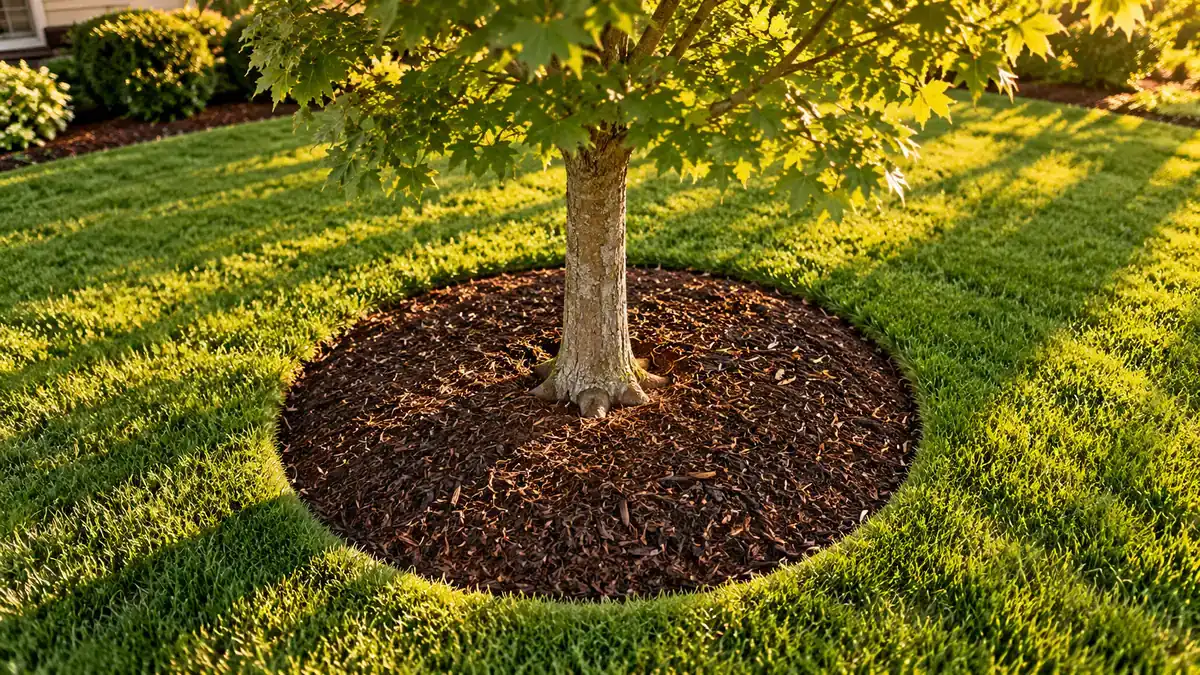
The biggest one is the mulch volcano: mulch piled high against the trunk of a tree. It keeps the bark wet, invites rot and insects and can lead to roots circling the trunk. Mulch should be spread in a wide, flat ring, with a few inches of clear space around the trunk.
Other mistakes include mulching over thick weeds without pulling them first, skipping the edging so mulch washes onto the walk, and adding a new layer every year until the beds are buried under a foot of old mulch.
When to mulch in Central Virginia
Spring is the most popular time, once the soil has warmed a bit and the spring weeds have been pulled. A fresh layer before summer helps beds hold moisture through the hot months. Fall mulching is also good, because it protects roots through winter and keeps beds looking neat.
If you would rather skip the wheelbarrow, mulch installation is something we do around Richmond, usually with bed cleanup and edging so the result looks finished.
Choosing the type of mulch
Shredded hardwood is the most common choice around Richmond. It knits together, stays in place on slopes and breaks down slowly into the soil. Dyed mulch, usually black, brown or red, keeps its color longer, which is why many front yards use it. Pine bark nuggets look tidy and last a long time but can float away in heavy rain. Pine straw is popular further south and works well under pines and azaleas.
Whatever you pick, buy from a source that sells clean, screened material without construction debris. For beds near the house, keep a few inches of space between the mulch and the siding to discourage insects.
Bed preparation makes the mulch last
Mulch looks best and works hardest on beds that were prepared first. Pull weeds by the root, rake out leaves and old matted mulch, and cut a clean edge where the bed meets the lawn or walk. A crisp edge keeps the mulch in the bed during storms and makes the whole yard look sharper.
If you want weeds to stay away longer, a thin layer of newspaper or cardboard under the mulch in problem areas helps, but avoid plastic sheeting, which keeps water and air out of the soil.
A quick example for a typical Richmond front yard
Say your front yard has a bed along the house that is 40 feet long and 5 feet deep, plus two round beds around trees with a 4-foot radius each. The house bed is 200 square feet. Each tree ring is about 50 square feet, so 100 for both. Total: 300 square feet.
At 3 inches deep, 300 times 3 is 900, divided by 324 is about 2.8 cubic yards, so you would order 3. If you are only topping up an existing layer by 2 inches, 300 times 2 is 600, divided by 324 is about 1.9, so 2 yards would do. Writing the numbers down before you call a supplier makes the order quick and avoids paying for a pile you do not need.
Mulch around trees
Around trees, spread mulch in a wide ring, ideally out toward the drip line, two to three inches deep and pulled back a few inches from the trunk. Piling mulch against the bark, often called a mulch volcano, holds moisture against the trunk and invites rot and pests. A wide, flat ring helps roots more than a tall pile ever will.
Free estimates for mulch installation
MG Tree Service installs mulch across the Richmond area and Fredericksburg. Estimates are free and we work seven days a week from 8 AM to 6 PM. We can edge the beds, clean them out and spread mulch at the right depth in one visit.
Frequently asked questions
- How many square feet does a yard of mulch cover?
- About 324 square feet at 1 inch deep, or roughly 100 to 160 square feet at 2 to 3 inches deep.
- Should I remove old mulch before adding new?
- Not always. If the old layer is thin, top it up. If it is thick and matted, break it up or remove some so the total depth stays around 2 to 3 inches.
- Is dyed mulch bad for plants?
- Dyed mulch made from clean wood is generally fine for landscape beds. Natural hardwood mulch breaks down a little faster and feeds the soil.
Related services
Found this helpful? Make us a preferred source on Google.
Ready for an exact price?
Get a free, no-pressure in-home estimate. Real numbers for your home, not a phone guess.