Stump Grinding vs Stump Removal: Which One Does Your Yard Need?
· By Marcos Gomes
Once a tree is gone, the stump is what is left to deal with. Some people leave it for years, mowing around it and tripping over it, until it finally becomes the last thing standing between them and a finished yard. When that day comes, you have two real options: grind the stump or remove it completely.
They sound similar, but they are very different jobs. This guide explains what each one involves, what it leaves behind and which one makes sense for most homes around Richmond and Central Virginia.
What stump grinding actually does
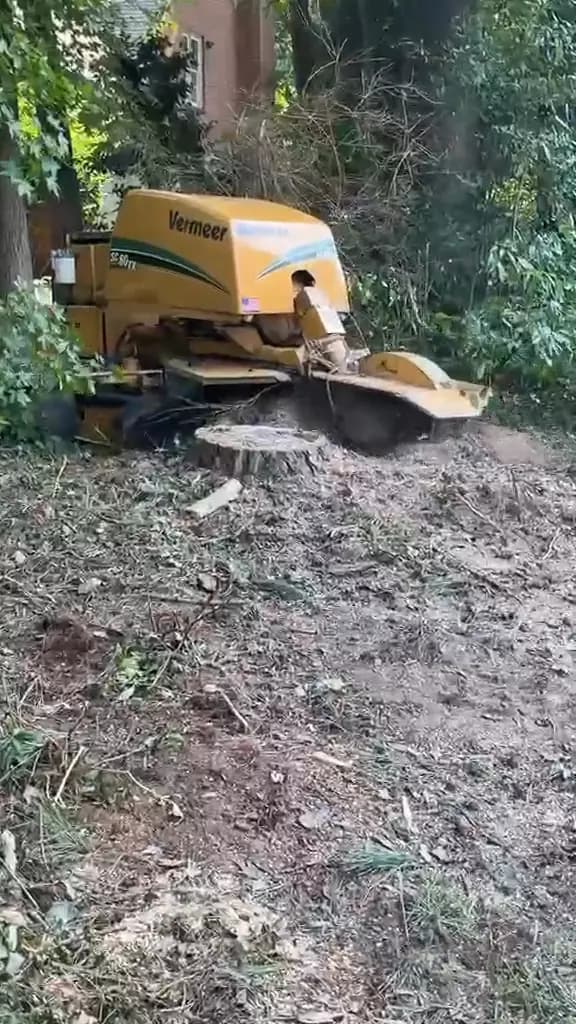
A stump grinder is a machine with a heavy cutting wheel lined with carbide teeth. The operator sweeps the spinning wheel back and forth across the stump, chewing it into wood chips a little at a time, until the stump is below the surface of the soil. The main surface roots running out from the stump can be ground the same way.
What stays behind is a shallow hole filled with grindings, a mix of wood chips and soil. The deep roots stay in the ground and slowly decompose over the following years. For a lawn, a garden bed or a patio paver base, that is almost always enough.
What full stump removal involves
Stump removal means pulling the entire stump and its root ball out of the ground. That usually requires digging around the stump, cutting the major roots and lifting it out with heavy equipment. On a mature oak or pine, the root ball can be as wide as a car.
The result is a large crater that has to be filled with soil and compacted, and the lawn around it is often torn up by the equipment. It is a much bigger job, and it is rarely necessary in a normal residential yard.
When grinding is the right choice
Grinding is the right choice for the large majority of stumps. If you want to mow over the spot, reseed it, put a flower bed there or simply get rid of an eyesore, grinding does the job with far less disruption. It is faster, the equipment fits through most gates and the yard around the stump stays in much better shape.
It also works well for several stumps at once. After a lot clearing job, grinding every stump below grade is what lets the area be graded and seeded.
When full removal might make sense
Full removal makes sense when something will be built exactly where the stump is. A new foundation, an addition or in some cases a driveway may need the root mass out so the ground is stable and does not settle as the roots decay.
It can also make sense for a very small stump that can be dug out by hand. For anything bigger, talk to the builder or contractor first. Often deep grinding over a wider area is enough for their purposes.
What to do with the hole after grinding
You can leave the grindings in the hole and let them settle, which is fine for a natural area or a mulch bed. For a lawn, it is better to rake out most of the chips, fill the hole with topsoil, tamp it down and seed or sod. Fresh wood chips mixed into soil can tie up nitrogen for a while, so grass grows better in clean topsoil.
Expect the spot to settle a little over the next months as the remaining roots decompose. Adding a bit more soil later is normal.
Will the stump grow back?
Most trees will not grow back after the stump is ground. A few species, including some maples, sweetgums and Bradford pears, can send up sprouts from the roots for a season or two. Cutting the sprouts as they appear usually ends it.
If sprouting is a concern, mention it before the job. Grinding a little deeper and wider around the stump can help.
Preparing for a stump grinding visit
A little preparation makes stump grinding faster and safer. Mark sprinkler heads, low-voltage lighting and any buried lines you know about near the stump. Underground utilities should be marked through Virginia 811 before any grinding, and the crew will usually handle that request. Move cars, toys and outdoor furniture away from the area, since a grinder throws chips.
Decide in advance what you want done with the grindings and the hole. If you plan to seed, have a little topsoil ready so you can fill and level the spot right after.
Several stumps? Plan them together
If you have more than one stump, it is almost always cheaper and faster to grind them in the same visit. Setting up the grinder and getting it to the yard is a big part of the work, so additional stumps on the same property usually cost less each. It also means the whole yard can be leveled and seeded at once instead of in patches over several seasons.
Walk the property before the estimate and count every stump, including old ones hidden in beds or along the fence. Small stumps along a fence line are easy to forget until the mower finds them.
Stumps from different trees
Not every stump behaves the same. Pine stumps usually die and rot without sprouting. Sweetgum, tulip poplar, maple and especially tree of heaven can send up sprouts from the roots or the stump for a year or more. Oak stumps are dense and grind slowly but rarely sprout. Knowing the species helps you decide whether a light grind is enough or whether you should grind deeper and watch for sprouts.
Grinding near patios, fences and foundations
Stumps close to hardscape need care. A grinder throws chips, so crews use shields or plywood to protect windows, cars and siding. Near a foundation or a patio, grinding can usually go close, but very large surface roots under the slab are often left in place so the hardscape is not undermined. Mark irrigation lines and invisible dog fences before the grinding starts.
Free estimates for stump grinding
MG Tree Service grinds stumps of all sizes across the Richmond area and Fredericksburg. Estimates are free and we work seven days a week from 8 AM to 6 PM. If you have several stumps, we can quote them all in one visit.
Frequently asked questions
- How deep does a stump get ground?
- Typically below the grass line so the spot can be leveled and seeded. If you plan to plant or build there, ask for deeper grinding.
- Is stump grinding messy?
- It throws chips around the stump, but a good crew rakes them up or leaves them neatly in the hole, depending on what you want.
- Can a stump grinder reach my backyard?
- Many grinders fit through standard gates. If access is very tight, mention it at the estimate so the right machine is brought.
- Can I just let the stump rot on its own?
- You can, but it takes many years, can attract insects and stays a mowing hazard the whole time.
Related services
Found this helpful? Make us a preferred source on Google.
Ready for an exact price?
Get a free, no-pressure in-home estimate. Real numbers for your home, not a phone guess.