
When to Prune Crepe Myrtles in Virginia (and How to Avoid "Crape Murder")
· By Marcos Gomes
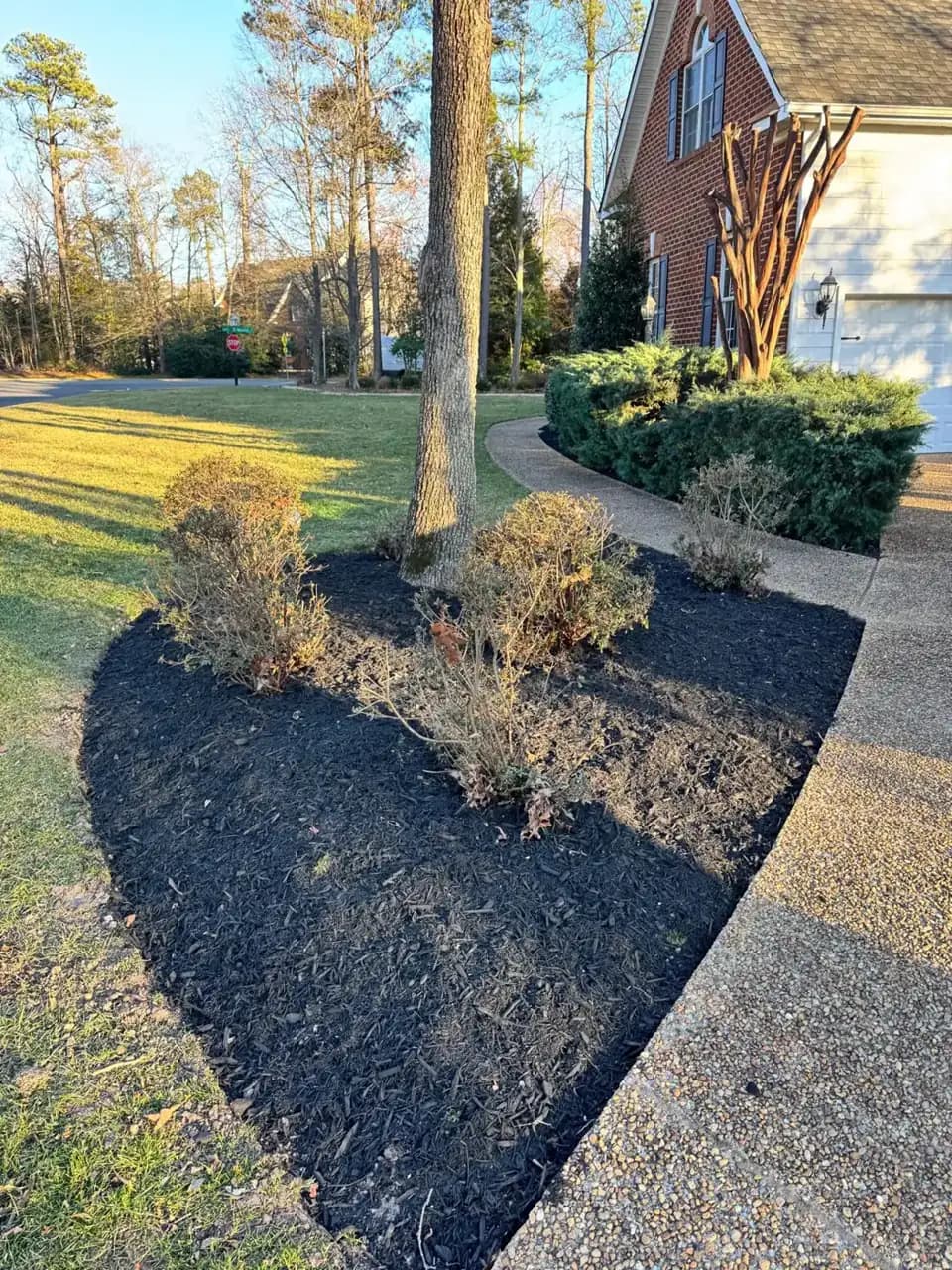
Crepe myrtles are one of the most common small trees in Richmond yards, lining driveways in Glen Allen, filling front beds in Chesterfield and blooming all summer in nearly every neighborhood. They are also one of the most mistreated. Every late winter, thousands get cut back to the same thick stubs, a habit so widespread it has a nickname: crape murder.
Here is when to prune crepe myrtles in Central Virginia, and how to do it so the tree stays strong and flowers well.
The best time: late winter to early spring
Crepe myrtles flower on new growth, so pruning before that growth starts does not cost you blooms. In Central Virginia, the sweet spot is late winter into early spring, roughly February through March, after the worst cold has passed and before the buds break.
Pruning in late summer or fall can encourage tender new growth that gets damaged by early freezes, so it is best avoided. Removing spent seed heads in summer, if you can reach them, can encourage a second flush of flowers.
What crape murder is and why it hurts
Crape murder is the practice of cutting every trunk back to the same height each year, often at the same spot, leaving thick knobby stubs. Each spring the stubs push out a cluster of long, thin shoots that are too weak to hold up the flower heads, which then flop over in summer rain.
Over the years, the knobs grow bigger and uglier, the wood around them can decay and the tree loses its natural vase shape and its beautiful smooth bark on the main trunks. It is extra work every year for a worse-looking tree.
How to prune a crepe myrtle the right way
Start by removing suckers growing from the base and any shoots sprouting low on the main trunks. Then take out dead wood, branches that cross and rub against each other, and branches growing toward the center of the tree. The goal is an open, vase-shaped canopy with good air flow.
Make cuts back to a side branch or to the trunk, not in the middle of a branch. If a crepe myrtle is simply too big for its spot, the honest answer is that it was the wrong variety for that place. Gradual thinning over a few years, or replacement with a smaller variety, works better than chopping it every winter.
Can a topped crepe myrtle be saved?
Often, yes. A crepe myrtle that has been topped for years can be restored by selecting a few strong shoots on each knob, removing the rest and letting those chosen shoots grow into new branches over two or three seasons. In some cases, cutting the whole tree near the ground and training new trunks from the strongest sprouts gives a better result.
It takes patience, but within a few years the tree can look natural again.
Size matters: choose the right variety
Crepe myrtles range from dwarf shrubs a few feet tall to trees that reach 25 feet or more. Many of the ones that get topped every year were simply planted too close to the house or under a window. When planting new ones, check the mature size on the tag and give them room.
When to call for help
Small crepe myrtles are a reasonable DIY project with sharp hand pruners and a pruning saw. Large, multi-trunk trees that are 15 to 25 feet tall, or a restoration job on badly topped trees, are easier and safer with a crew that has ladders, saws and a chipper.
We thin and shape crepe myrtles around Richmond as part of tree trimming visits, and we do not top them.
Crepe myrtle care beyond pruning
Pruning is only part of keeping crepe myrtles looking their best. They bloom most in full sun, so trees shaded by larger trees often flower less no matter how they are pruned. Mulch in a wide, flat ring helps with summer moisture, and avoiding high-nitrogen lawn fertilizer near the roots keeps them flowering rather than producing only leaves.
Watch for crape myrtle bark scale, an insect that has spread into Virginia. It shows up as white or gray felt-like spots on the bark and black sooty mold on the trunk and leaves. If you see it, have the tree looked at, since the treatment is different from normal pruning.
Tools and cuts for a clean job
For small crepe myrtles, sharp bypass hand pruners handle shoots up to about half an inch, loppers handle up to about an inch and a half, and a pruning saw takes care of anything larger. Clean blades make cleaner cuts that close faster.
Cut just outside the slight swelling where a branch meets the trunk or a larger branch, called the branch collar, and do not leave stubs. When removing a larger branch, make a small undercut first so the bark does not tear down the trunk when the branch falls. These basic cuts are the same whether you prune a crepe myrtle or a big oak, and they keep the tree healthy.
Pruning young crepe myrtles to avoid problems later
The easiest crepe myrtle to manage is one that was shaped well when it was young. In the first few years, choose three to five strong trunks that grow up and slightly outward, remove the rest at the ground and take off branches that cross or rub. After that, the tree mostly needs suckers removed and an occasional thinning.
A well-shaped young crepe myrtle almost never needs to be cut back hard, which saves you work for the rest of its life.
Crepe myrtle bark scale
Crepe myrtle bark scale has spread through much of the Southeast, including parts of Virginia. It shows up as white or gray crusty spots on the bark and black sooty mold on trunks and leaves. Heavy pruning does not cure it. If you see these signs, look up current guidance from Virginia Cooperative Extension or ask a tree professional before you cut.
Free estimates for crepe myrtle pruning
MG Tree Service prunes crepe myrtles the right way, without topping, across the Richmond area. Estimates are free and we work seven days a week from 8 AM to 6 PM. Late winter books up quickly, so it helps to plan ahead.
Frequently asked questions
- Is it okay to cut crepe myrtles back hard every year?
- No. Topping them every year creates knobs and weak shoots. Thinning and removing crossing branches is better for the tree and the flowers.
- When is it too late to prune crepe myrtles?
- Once new growth has started in spring, heavy pruning should wait. Avoid late summer and fall pruning too.
- Will pruning make my crepe myrtle bloom more?
- Good thinning improves air flow and light, which supports healthy blooms. Topping does not increase flowering in the long run.
Related services
Found this helpful? Make us a preferred source on Google.
Ready for an exact price?
Get a free, no-pressure in-home estimate. Real numbers for your home, not a phone guess.